


My objective with the global vintage report for Cabernet Franc is to provide a snapshot of a grape, a place, a moment in time, and highlight the experiences of the people who work directly with the grape from vineyard to cellar. It serves as part reference for the wine drinker who may come across these wines in the market, and part reference for me — a record to return to when I cover these regions and their producers again in the future, with the legwork already done on how vintage conditions shaped what we taste in the glass. Vintage reports certainly don’t tell the whole story, but in the regions I cover below, my goal is to get first-hand insights from key producers who have a strong focus on Cabernet Franc in their particular region that is then supplemented by additional research. With coverage of 17 regions in 9 countries on 4 continents, the report is long — so dive into the sections that connect with the regions and wines you love to drink.
Southern Hemisphere
Uco Valley, Mendoza, Argentina: Aromatic, Vibrant, Textured
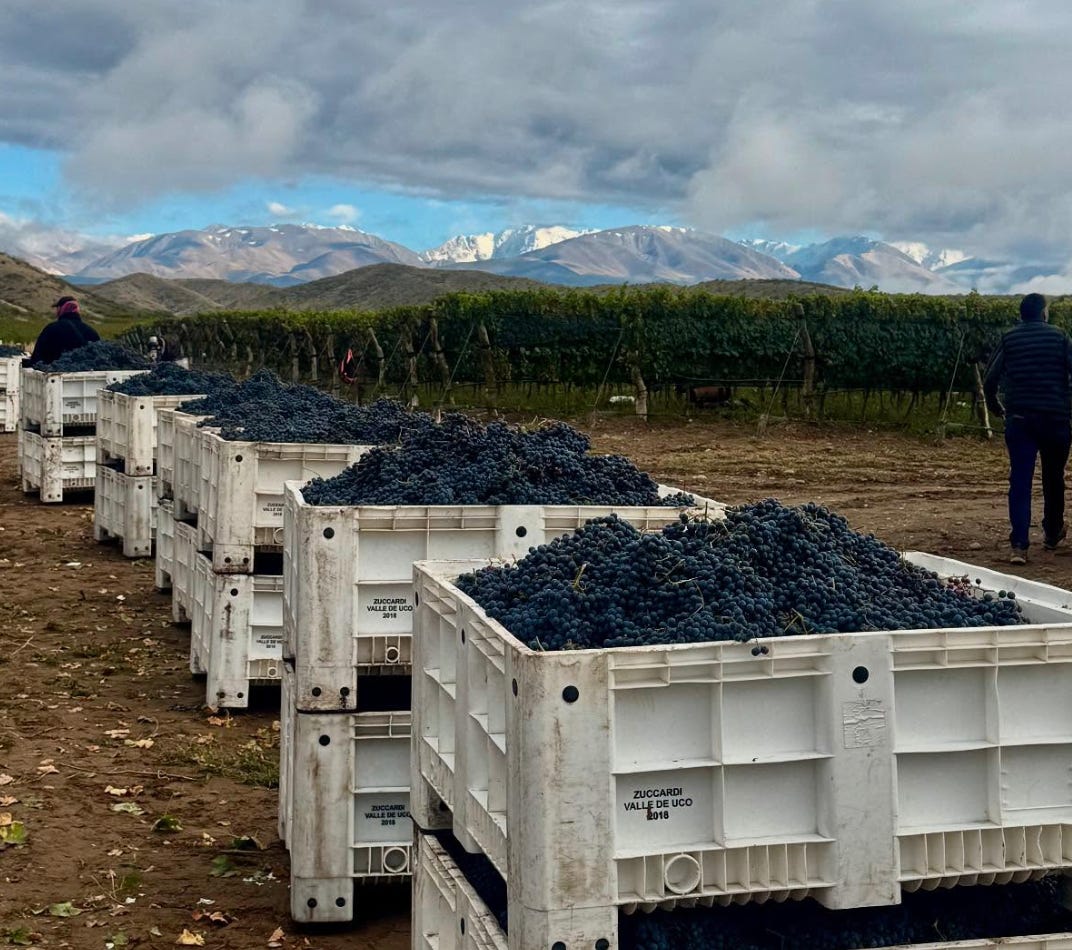
The 2025 growing season began with a spring that was milder than average leading buds to burst around the third week of September. While frost is common in many high-altitude parts of the Uco Valley, no significant frost events occurred for Cabernet Franc in the Zuccardi family's parcels in San Pablo and Gualtallary, resulting in an outlook of promising yields at the start of the growing season. Conditions in late spring remained favourable for bloom and fruit set. The peak summer conditions were warmer than average, with low rainfall — “classic Mendoza summertime” according to Martín Di Stefano, vineyard manager at Zuccardi. The region experienced a dramatic cool-down in the final weeks of the growing season, beginning in March and continuing through April. This cool-down coupled with periodic showers was particularly beneficial for the reds, creating “slow ripening conditions with a long hang-time,” according to Di Stefano. Zuccardi harvested the Cabernet Franc in Gualtallary between March 21st and 29th and from San Pablo on April 2nd and 3rd. Yields were above average and winemaker Laura Principiano describes the quality of their Cabernet Francs as “very good” with “great aromatic complexity, very good quality tannins, texture and vibrancy.”
Peumo, Cachapoal, Central Valley, Chile: Transparency and Tension
The 2025 growing season was blessed with a winter that was wetter than average, with Viña La Rosa recording 654mm of rain at their vineyards in Peumo during the season, setting up good ground reserves for the vintage ahead. The spring was warmer than average with budbreak arriving a week ahead of schedule, and these favourable conditions continued through flowering and fruit set leading to “well-formed, evenly composed clusters,” according to Gonzalo Cárcamo, head of enology at Viña La Rosa. Summer conditions in Peumo and across the Cachapoal Valley were hot, dry, and warmer than average, though winter reserves meant that Viña La Rosa didn’t need to start precision deficit irrigation until November, “allowing natural soil dynamics to drive early-season development.” The warm and dry conditions accelerated the season by about 7 to 10 days, and the estate began to pick their Cabernet Franc from its Cornellana Vineyard on March 4th, and quality was “excellent” according to Cárcamo, adding there was “no berry shrivel or heat stress symptoms visible in the fruit.” Across Chile, yields were down in 2025; however Viña La Rosa’s Cabernet Franc yields were on target for the estate at 6 tons/hectare. While still early, the Cornellana Cabernet Franc is showing great “linearity and transparency” with “a chalk-like tannin texture and a graphite-like character in the finished wine,” according to Cárcamo.
Atlántida, Canalones, Uruguay: Refined, Fresh, Approachable
The winter in the coastal sub-zone of Atlántida was mild, with adequate rainfall helping to replenish ground reserves going into the growing season. Spring was mild with intermittent rains leading to an early budbreak, followed by variable weather through flowering and fruit set, though no adverse effects from these conditions were observed in the Cabernet Franc parcel at Bracco Bosca Winery, according to Fabiana Bracco. The summertime conditions were warm, though never hot, and following véraison Bracco observed “a mix of sunshine and occasional rainfall, which slowed down sugar accumulation at times but helped preserve acidity.” The vintage concluded on a positive note with good conditions during the harvest of the estate’s Cabernet Franc. Bracco noted that the estate’s 2025 Cabernet Franc is all about “freshness and finesse,” adding the wine is “highly expressive with moderate structure, refined tannins and an elegant and approachable profile.”
Stellenbosch, Western Cape, South Africa: Structured and Cellar-Worthy
The 2025 vintage benefited from a winter that was colder and wetter than average across Stellenbosch, with both Bruwer Raats of Raats Family Wines in the Polkadraai Hills and Anton Malan of Rainbow’s End in the Banghoek Valley observing higher-than-average rainfall in the winter replenishing water reserves following a warm end to the 2024 vintage. The cooler conditions continued into the spring, delaying budbreak to mid-September for Cabernet Franc, about a week later than usual. There was gradual warming through late spring and into summer. The summer was warm and dry, with no heat spikes or heatwaves, and the nighttime temperatures were cooler than average, slowing down ripening. A cool-down in February and into early March delayed harvest for many with both Raats Family Wines and Rainbow’s End reporting to have harvested a week to 10 days later than average. The extended hang-time was welcomed, with Raats noting “excellent phenolic maturity” at the time of harvest. Malan remarked, “Since our first Cabernet Franc at Rainbow’s End in 2005 I think 2025 is the best vintage I’ve ever experienced.” Rainbow’s End’s 2025 Cabernet Francs are marked by “excellent fruit expression. Intense as well as elegant with good Cabernet Franc varietal character.” Raats noted that the estate’s 2025s show “very good concentration, supple tannins, balanced acidities, with quality similar to classic vintages like 2021, 2017 and 2015.”
North America
Napa Valley, California, USA: Expressive and Focused
The region was blessed with a winter that was wetter than average in 2024/2025, which meant that Napa Valley’s 2025 growing season started with very good rainfall reserves after many years of drought conditions. Budbreak occurred in March without issue, and the season progressed through flowering and fruit set under ideal conditions. By June, the 2025 season began to resemble the 2023 and 2021 vintages, according to John Skupny of Lang & Reed, where the impacts of climate change are presenting “something of a half standard” with “a sustained drawing in of coastal fog into the Napa Valley in the mornings for the duration of the growing season,” creating a cooler start to the day and more moderate conditions overall. Skupny observed no temperatures in excess of 37C (100F) in the Cabernet Franc parcels at the Sugarloaf Mountain Vineyard in southeastern Napa Valley, and only five days above 37C (100F) at the Ryan Vineyard in the Oak Knoll District, with temperatures averaging in the high 20s C (80s F). Lang & Reed harvested the estate’s Cabernet Franc from both sites on October 9th under ideal conditions. Skupny remarked that the estate’s 2025 Cabernet Francs have a “vibrant colour and good density” with an aromatic profile that is “expressive, floral and herbaceous” and an overall profile that is “svelte” from Sugarloaf Mountain and “nervy” from Ryan Vineyard.
Livermore Valley, California, USA: Fruit, Freshness, Benchmark
The 2025 vintage showed similarities to other recent odd-numbered vintages like 2023 and 2021, according to Steven Mirassou of Steven Kent Winery, which were marked by very low rainfall. The spring began without incident, with budbreak occurring for Cabernet Franc in mid-May, followed by favourable, moderate conditions into June and July. Conditions were warm, but never excessively hot, with only two days registered above 37C (100F) during the entire growing season. Post-véraison conditions were ideal, characterized by warm, sunny days with strong afternoon winds stopped the physiological development of the vine during the warmest part of the day, slowing down ripening and lengthening the growing season. Mirassou and his team harvested their Cabernet Franc for their Cabernet Franc Blanc on September 16th and concluded with their Ghielmetti Vineyard for reds on October 31st, nearly two weeks later than in 2024, with potential alcohols around 13.2 - 13.9% for the reds. “2023 was one of the finest vintages in the 30 years I have been making wine in Livermore for Cab Franc. 2025 is very nearly its equal,” Mirassou remarked, adding the wines show “the hallmark Livermore structure of balanced ripeness on entry, with emphasis on fruit, mid-palate grip, chalky tannins, and abundant acidity.”
Walla Walla Valley, Washington, USA: Balanced and Varietally Expressive
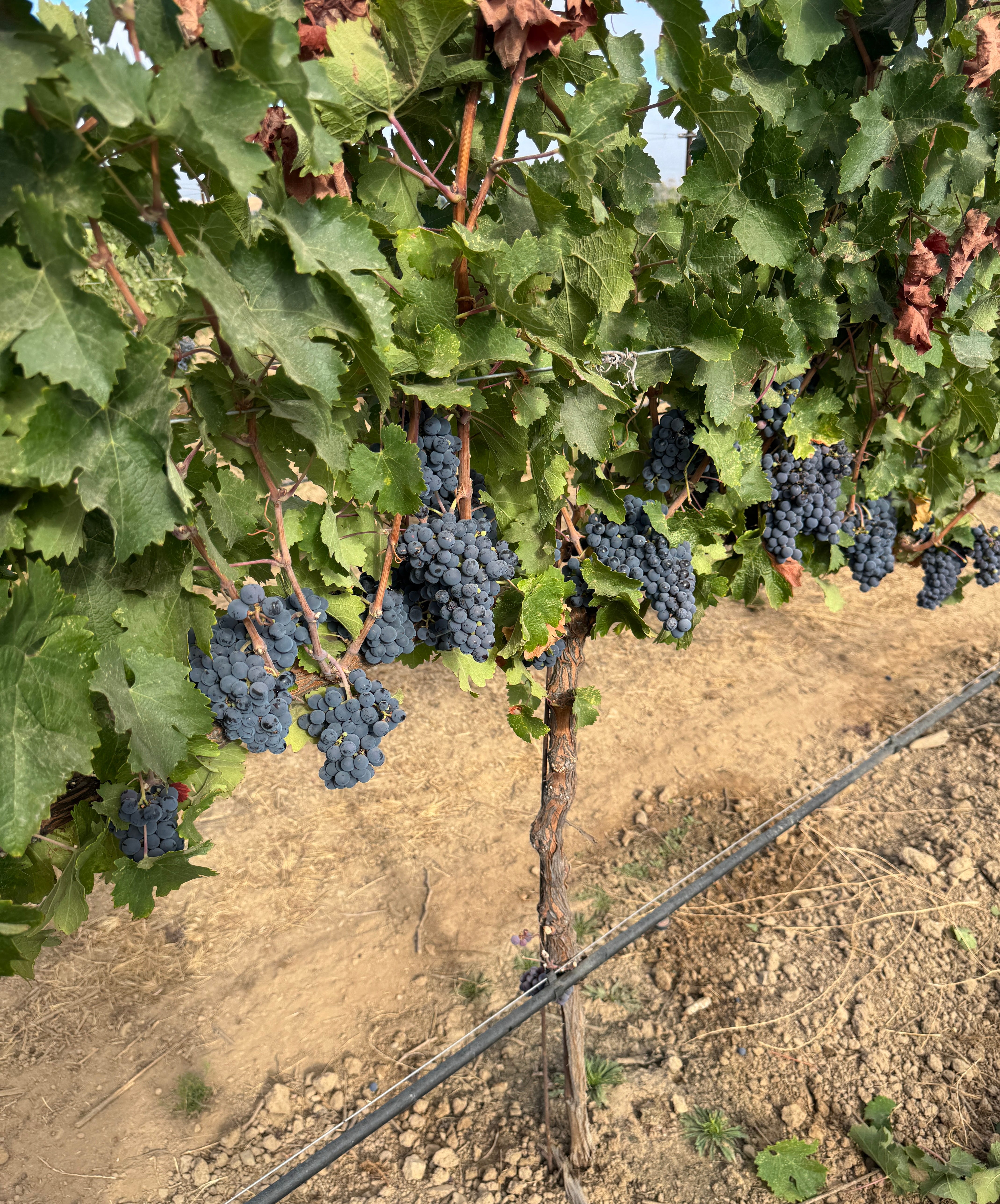
The 2024/2025 winter season in Walla Walla was milder than average with no extreme cold events that may have adversely affected the vines. The spring season was mild and a late March warm spell pushed the Cabernet Franc buds open at Echolands Winery about 7 to 10 days ahead of normal, but conditions remained favourable through April and May with no frost events that may have impacted yield. The warm and dry spring conditions continued with a heat spike in late-May/early June that caused shatter, lowering yields for some varieties, but owner Doug Frost noted, “Cabernet Franc’s early budding status put it ahead of most other varieties and we enjoyed very uniform set and later berry size uniformity.” Conditions through the duration of the growing season leading up to harvest were “excellent,” according to Frost with “warm days, cool nights, which lead to good fruit development” and no heat spikes. Harvest began about 2 weeks early for Cabernet Franc, picking for rosé from the Blue Mountain Vineyard on September 9th continuing with reds starting around the 18th under ideal conditions. Frost remarked that Brix accumulation often outpaces phenolic ripeness, but in 2025 “things lined up nicely” with “phenolics ripening early,” adding that their decision to pick early was “rewarded with very balanced acids, low-ish Brix, and lovely ripe flavours.” Though yields were down slightly for Cabernet Franc at the end of the season, quality looks very good — “balanced and beautiful,” according to Frost — with alcohols 13 - 13.4% hitting “the sweet spot where red and blue fruits and perfume are the core impression with accents of noble pyrazines.”
Willamette Valley, Oregon, USA: Vibrant and Composed
A warm spring meant an early start to the 2025 growing season in the northern Willamette Valley, according Bree Stock, owner and winemaker at Limited Addition Wines. Budbreak for the estate’s Cabernet Franc was in early April, which was followed by favourable conditions through flowering and fruit set into May and June. Unlike some other recent vintages, 2025 saw favourable, even conditions for the entirety of the growing season, with no heat spikes, wind events, or prolonged cold conditions, though the season was a little drier than average. These ideal conditions meant the head start the vines got at the beginning of the season was maintained and the Cabernet Franc harvest began on October 10th, about two and a half weeks earlier than average. Stock noted that yields were a little larger than average, “but ideal conditions without heat extremes ensured full flavour ripening and low levels of pyrazines.” When asked about the finished wines, Stock remarked, “exceptional on every level” with “good flavor development, ripe tannin and phenolic resolution.” The ripe tannin profile, coupled with bright but slightly softer acidities, has given Cabernet Francs that “feel incredibly drinkable, vibrant, and composed at a young age,” according to Stock.
Virginia, USA: Aromatic, Savoury, Elegant
After a cooler-than-average winter, a mild spring meant budbreak arrived across much of Virginia in early April, about 10 days ahead of schedule. The early budbreak left vines vulnerable to frost events that occurred on April 9th and 16th, though higher elevation areas (above 700ft/213m) and mature Cabernet Franc vines were largely unaffected. Wetter conditions arrived in late May and into June, which impacted flowering and fruit set, though this impact varied widely across the state. Winemaker Maya Hood Johnson of Early Mountain in Madison County noted the estate’s Quaker Run Cabernet Franc experienced a lighter fruit set, while Robbie Corpora, who manages the Cabernet Franc parcels at Ramiiisol Vineyards and his own estate, Podere Piccolo, in the Monticello AVA observed normal vine and cluster development during this early period of the season. During the critical last several weeks before harvest, conditions became much drier and warmer allowing very good fruit ripening and phenolic development during the home stretch. Cabernet Franc harvest for Ramiiisol in Monticello was between August 29th and September 3rd, while Early Mountain picked their Cabernet Franc between September 22nd and 24th1. When asked about their early impressions of the 2025 vintage for their Cabernet Francs, Corpora remarked his wines display “lighter body, with a high aromatic intensity, with red fruit that highlights the savoury herbaceous side of Cabernet Franc,” and Johnson noted their 2025 Cabernet Francs “show the quintessential Quaker Run attributes shining through, with slightly more red fruit characteristics and elegant tannins… There is an elegance to them that showcases the dynamics of the vintage perfectly.”
Long Island, New York, USA: Concentration and Character
The 2025 growing season on the North Fork of Long Island started off calmly with a mild winter and spring conditions that were on track with historical averages for rainfall and temperatures. Budbreak came at the end of April, followed by more overcast and wet conditions in May. Despite these conditions, Marin Brennan, winemaker at Bedell Cellars, noted that Cabernet Franc fared well through flowering and fruit set, which set up the vines with good crop levels going into the summer season. July, August and September were mostly warm, with cool nights and rainfall levels below 50mm per month, providing ideal conditions for fruit ripening and flavour development. Just ahead of the harvest of their Cabernet Franc, a nor’easter came through the region bringing rain and strong winds, but Brennan noted their Cabernet Franc “dried quickly afterwards, and the fruit remained clean, healthy, and of exceptional quality,” and all of their parcels were harvested for reds between the 15th and 17th of October. The 2025 vintage is looking to be “exceptional,” according to Brennan, with their reds achieving great depth and balance, noting that “what stands out most is the combination of concentration and freshness.” Brennen added that the wines “already display tremendous character and promise. I believe 2025 will be remembered as one of the standout vintages on the North Fork.”
Finger Lakes, New York, USA: Ample with Balanced Earthiness
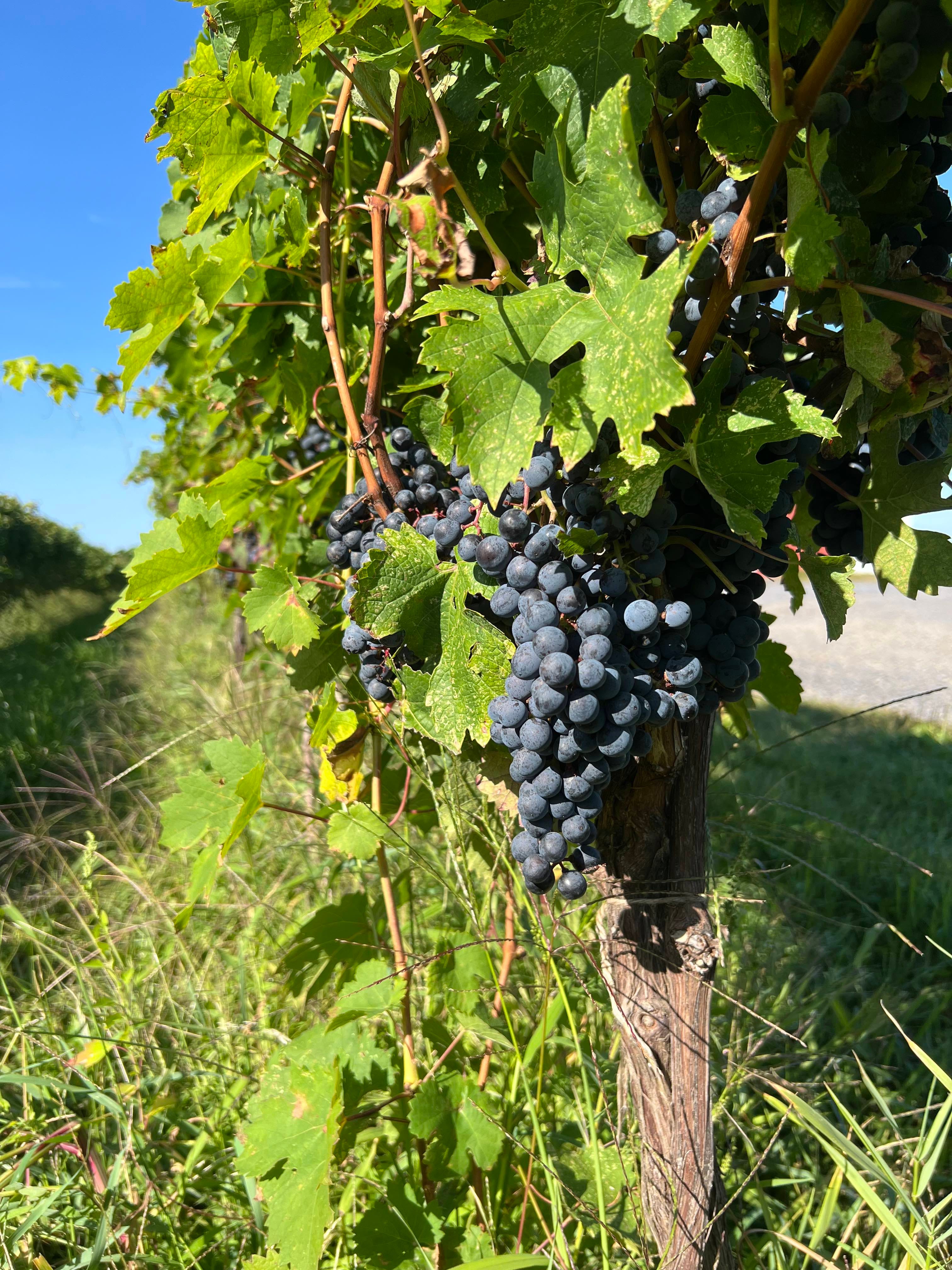
Fortunately, the winter of 2024/2025 was kind to Finger Lakes grape growers with milder-than-average temperatures and no extreme cold events that could impact vine health. The spring began with milder temperatures through March and April, with budbreak at the end of April, a bit ahead of schedule. The spring through early June was wetter than average, which meant grape growers needed to be vigilant with sprays to guard against mildew pressure early on, though Dillon Buckley, winemaker at Hermann J. Wiemer, remarked, “It was nothing that Cabernet Franc can’t handle.” From mid-June the vintage turned around completely, with warm weather and very dry conditions that continued through July and August and into September, with some drought stress observed by véraison in early August. Buckley added, “We saw a generally slightly smaller crop across all the Cabernet Franc blocks. However, those blocks tend to be in our sites that saw better rainfall and have better water-holding capacity in the soils.” Conditions in September leading up to harvest were ideal, promoting excellent ripening during the critical final stretch of the season. Cabernet Franc harvest at Hermann J. Wiemer began in earnest on October 15th, concluding October 24th. On the heels of excellent Cabernet Franc vintages in 2020, 2022, 2023 and 2024, the 2025 vintage is showing great promise. “The wines in tank and barrel are really exciting,” remarked Buckley, adding their Cabernet Francs show “ample structure, good balance between fruit and herbaceous notes, and are carrying their ripeness well.”
Niagara Peninsula, Ontario, Canada: Confident, Pleasurable, Humble
After a relatively mild winter by Ontario standards, the spring season began with a warmer-than-average March and April, which led to the Cabernet Franc vines at Vineland Estates’ Bo-Teek Vineyard to bud out on May 5th, a few weeks earlier than usual. The early budbreak led to many restless nights, as conditions in May were significantly cooler, though thankfully never dipping below 0C. Conditions improved through June, with July and August being warmer and drier than average. By August 12th, véraison kicked off more or less on target for Cabernet Franc, according to winemaker Brian Schmidt. Weather conditions in September can always be unpredictable, but in 2025 the final weeks leading up to harvest were ideal for late-season reds with mild, sunny days, cooler nights, and no major rain events. The team at Vineland began harvesting Cabernet Franc on October 13th, concluding on October 30th under mainly blue skies and favourable conditions. When asked about his impressions of the 2025 vintage for Cabernet Franc, Schmidt remarked that it was “aspirationally perfect,” adding that it was a vintage where “experience met craft.” The Vineland Estates Cabernet Francs are “confident and pleasurable,” according to Schmidt, displaying “delightful aromatics, mature, supple tannins, and concentration that carries the 13.5% alcohol well.” He adds that the 2025 ‘General List’2 Cabernet Franc is “the best we’ve ever made in my 35 vintages at Vineland.”
Europe
Villány, Pannon, Hungary: Definition, Freshness, Site-Expressive
The 2025 vintage for Hungary’s premier region for Cabernet Franc was more “measured and classical,” according to Susann Hanauer, of Wassmann Winery in Siklós. The winter season was mild and dry, followed by a spring that saw moderate rainfall helping to restore some groundwater reserves. Budbreak came in early April, followed by variable conditions through early spring and into May, with cooler conditions experienced during flowering, which beneficially reduced yields. The summer and peak growing season saw ideal conditions for physiological development: warm days, but no heatwaves, low but well-timed rainfall and plenty of sunshine. September conditions were ideal leading up to a mid-September harvest with warm days and cool nights marking a gradual, moderate close to the season, helping to “preserve freshness and definition,” according to Hanauer. “Elegance, clarity and balance” are what define the 2025 Cabernet Franc from Wassmann Winery with “good aromatics, fresh acidity and refined tannins.” In Villány terms, Hanauer adds, this “looks less like a blockbuster vintage and more like a harmonious, site-expressive one.”
Bolgheri, Tuscany, Italy: Elegance and Precision
The 2025 growing season in Bolgheri began a little cooler than average through late winter and into March, which delayed budbreak in some parts of the region. The spring conditions overall were favourable, with a gradual warming of temperatures into the summer season, and flowering and fruit set “took place under good conditions, without major weather disturbances” according to Nicolò Carrara, winemaker at Tenuta Argentiera, resulting in “healthy and balanced bunch development with moderate and homogeneous yields across the vineyards.” Summer conditions were favourable, with warm but not excessive temperatures, dry conditions punctuated by the odd beneficial shower, and long sunshine hours. Elia Campolmi, second generation at Le Macchiole, noted that in warm vintages like 2025, “canopy management was crucial to preserve the future quality.” Conditions remained favourable through harvest, with Le Macchiole harvesting their Cabernet Franc during the last two weeks of September. Early impressions of the 2025 Cabernet Francs from two of Bolgheri’s leading estates are very positive with Campolmi noting they achieved the “freshness and elegance that have always been the hallmark of our wines… with a solid tannic backbone and structure characteristic of the vintage.” At Argentiera, Carrara observed that their Cabernet Francs as showing “remarkable finesse and precision, with fresh aromatic profiles, refined tannins and excellent balance.”
Alta Maremma, Tuscany, Italy: Delicacy and Finesse
The winter of 2024/2025 brought mild conditions with regular rainfall that helped to boost water reserves in the soils going into the spring and summer. Spring was characterized by cooler conditions, though budbreak for the Cabernet Franc at Ampeleia was in line with their historical average, taking place at the end of March. The spring saw a gradual warming of temperatures and drier conditions, with flowering and fruit set taking place under favourable conditions. Marco Tait, winemaker at Ampeleia, remarked that while it was warm, “temperatures were not excessively high, and cool nights helped maintain vine balance.” August began with a significant hailstorm on the 3rd, which “resulted in an estimated 20% loss of clusters,” according to Tait. While August remained warm and dry, conditions became less favourable into September in the final weeks leading up to harvest with cooler temperatures and regular rainfall. Ampeleia picked their Cabernet Franc during the last 10 days of September, and Tait noted that “weather conditions during harvest allowed for the picking of healthy fruit… with sugar levels and acidity within a normal range.” Stylistically, Tait remarked that while Ampeleia’s 2025 Cabernet Francs don’t have the structure and body seen in warmer years “the wines do display notable elegance, finesse, and a refined, gentle character.”
Bordeaux, France: Finely Structured, Concentration, Ageability
One of the effects of climate change that is widely observed in regions around the world is that of extreme variation in climatic conditions from year to year. The 2025 vintage in Bordeaux couldn’t be more different from that of 2024, marked by extreme heat and drought during the summer season. The spring conditions were mild with average rainfall, which brought on an earlier-than-normal budbreak. A gradual warming through April and May brought ideal warm, sunny conditions at flowering at the end of May, though a small crop already predetermined for much of the region due to the less-than-favourable conditions during inflorescence in 2024.
June brought with it complicated conditions of higher rainfalls earlier in the month followed by extreme heat, peaking between June 17th and June 22nd, which prompted mildew concerns. David Stannard, based in Cardan (Entre-Deux-Mers) at Paradise Rescued, remarked, “In 2025, it was still a tough year from the point of view of mildew again — probably not as impactful as 2023 or ‘24, but still pretty serious.” Vigilant vineyard and canopy management was necessary to protect against mildew pressure, but also protect clusters from excessive heat and sunshine. Louis Gadais, technical director at Château Jean Faure, noted that “Cabernet Franc showed particular vigour this year, leading the way in terms of vegetative growth. Vineyard management prioritized vertical canopy positioning and limited trimming, thereby fostering shade and protecting the berries from excessive light and heat.”
The persistent warm temperatures and dry conditions continued through July and into August, including a further heatwave in early August, when temperatures exceeded 30C for several days. A peak of 41.3C was recorded at Château Jean Faure on August 11th, breaking the record set in 2022. Conditions remained dry until late August, with some generous rain experienced on the 20th and 30th, providing the right amount of refreshment and beneficial dilution. Harvest was early and condensed across much of Bordeaux. At Jean Faure, they harvested their Cabernet Franc between September 15th and 18th under ideal conditions, and Paradise Rescued harvested their Cabernet Franc on September 20th.
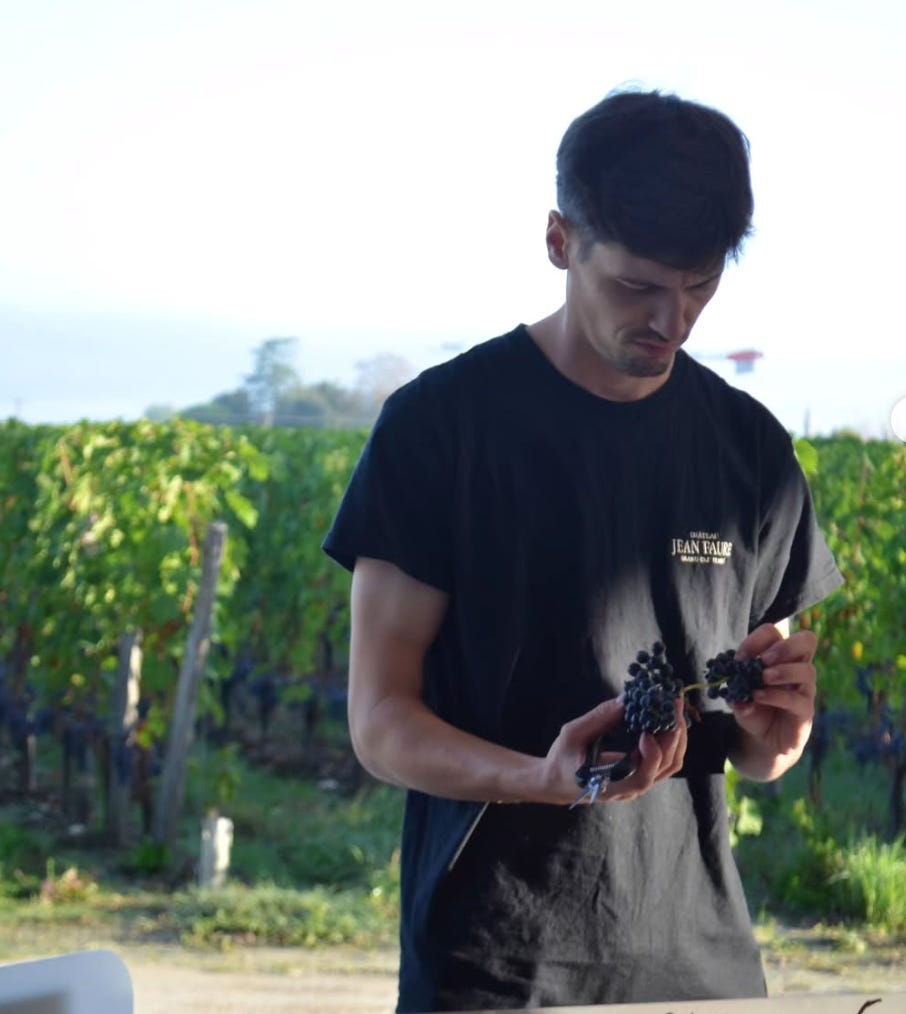
Yields were very low, as anticipated, though quality was high with Jean Faure’s Gadais noting the fruit “yielded juice of great aromatic purity and excellent balance, combined with impressive concentration.” Stannard described his Cabernet Franc as “rich and full-bodied still with a fruit-forward freshness. You can still pick that natural balance that comes with a Cabernet Franc between acidity and fruit.” At Jean Faure, their Cabernet Franc displays “remarkable balance” with a final alcohol of 13.5% and “lovely freshness, a fine tannic structure, and distinct aging potential.”
Loire Valley, France: Fresh, Generous, Harmonious
After a very wet 2024 vintage, the winter of 2024/2025 also saw more precipitation than average, though it was slightly cooler than most winters. Early spring was cool and wet, thus delaying budbreak — never a bad thing as spring weather has proven to be quite unpredictable in recent years. Following budbreak in early April, conditions were ideal through May during flowering and fruit set, though the vintage was predestined to have lower yields because of widespread low inflorescence due to the persistent cool and wet conditions during June and July 2024.
By late May and into early June, summer was in full swing with warmer-than-average temperatures and lower rainfall. An early-summer heatwave experienced in the third week of June saw temperatures climb above 40C for a few days, eventually returning to more “normal” temperatures though still warmer than the historical average.
July and August remained warm and dry, prompting concerns of drought stress in some vineyards, though thanks to the plentiful groundwater reserves, very few vignerons remarked as observing any drought stress in their parcels. Véraison kicked off in late July, and the first three weeks of August remained very warm and dry, though overnight temperatures were cool, helping to slow down ripening. Rainfall during the summertime was lower than average, but some well-timed showers in July followed by a generous rainfall on August 29th gave the vines exactly the right amount of moisture to reach excellent phenolic maturity leading up to harvest.

A few early September showers prompted vignerons to be extremely vigilant with harvest dates as the showers served to concentrate sugars while diluting acidity depending on the parcels. Many vignerons began harvesting their Cabernet Franc for reds between September 15th to 17th, concluding by about the 25th of September, and conditions during harvest were idyllic — a fitting close to what had been a near-flawless growing season.
The 2025 vintage for Cabernet Franc in the Loire Valley is marked by lower-than-average yields as a result of the low inflorescence in 2024 and the dry conditions during the summer that resulted in smaller berries and low bunch weights. Yields were down 20-25%, with yields ranging from 25 to 40 hl/ha. Despite low yields, quality was excellent and very homogeneous. Alcohols were moderate, ranging from 12.5% to 13.5%, with softer acidities, moderate pH levels, ripe tannins and very good concentration.


Chinon: The 2025 vintage across Chinon looks to be very homogeneous, with very good to excellent quality from vineyards on the alluvial terrace and the slopes. In contrast to 2022, another warm and dry vintage, vignerons noted less drought stress on the sandy-gravelly soils in 2025. “I believe it is an excellent vintage, though one defined by elegance and finesse rather than power,” remarked Matthieu Baudry of Domaine Bernard Baudry in Cravant-les-Côteaux, adding “in a dry vintage like this, maintaining the vitality of the foliage was crucial — something we achieved through regular vineyard maintenance and soil cultivation.” When asked about his impressions of the wines in June 2026, Baudry remarked, “I am struck by the balance between sugar and acidity; they seem to complement each other perfectly, set against a backdrop of generous fruit.”
Bourgueil/St-Nicolas-de-Bourgueil: While it would seem counterintuitive to have significant rainfall in the last two weeks before harvest (60mm observed at Domaine Yannick Amirault), Benoît Amirault remarked that this rainfall “shaped significantly the vintage’s profile — shifting it from what promised to be extreme to something balanced.” The wines themselves show “silky, harmonious texture with no heaviness or sense of excessive ripeness… with varietal notes that are relatively pronounced for an early, sun-drenched vintage.” Amirault also noted great consistency across terroirs on the slopes as well as the alluvial terrace — a common theme across the region.
Saumur-Champigny/Saumur: While Chinon, Bourgueil and St-Nicolas-de-Bourgueil have large swaths of alluvial terroirs, Saumur-Champigny and large parts of the greater Saumur region are dominated by clay-limestone terroirs that are prized for the moisture-retention capacity, which is particularly beneficial in vintages like 2025. While the initial quality is excellent, some vignerons have noted that a longer, more patient élevage will be necessary for the wines from these terroirs to show their true colours. “Wines from clay soils exhibit very firm tannins on the finish — a characteristic that must be tamed during aging,” noted Arnaud Lambert, of Domaine Arnaud Lambert, adding “I believe this 2025 vintage will be highly concentrated and quite powerful, yet it retains that underlying limestone structure that lengthens the palate. It is certainly a wine built for aging.”
Anjou: In western Anjou, where the schist terroirs take over from the limestone soils of Saumur and Touraine, vintages like 2025, while exceptional, present their own complications due to the drought stress that can be amplified on these types of soils. Quentin Cailleau of Domaine Sauveroy noted that the “lack of water severely limited berry expansion, resulting in particularly small berries. Yields were around 25 hl/ha in 2025.” Despite the low yields, and while it is still early, Cailleau observed, “the potential looks very promising… The wines currently display a rich, sun-kissed profile, with impressive depth and aromas of ripe fruit. Despite this ripeness, they retain a certain freshness thanks to being harvested at the optimal time. The result is a set of intense, deep wines with excellent substance.”
A note from my own tastings: During tastings of some tank samples earlier in the year as well as several finished “early-drinking” wines that are already being sold in the market, I am in love with what I’ve tasted from the 2025 vintage thus far. Many of the wines I’ve tried display generous and plush fruit that doesn’t feel overripe or heavy, with softer aromatics at this stage, though still exhibiting the pyrazines that I’ve come to note in warmer, drier vintages (bay leaf, garrigue, mint). Acidities are soft but fresh, and the tannins are quite stunning — remarkably fine, velour-like with density and ripeness. While I think there are those who will find the wines from 20243 a little challenging and not to their palate, there is an undeniable likability to the 2025 Cabernet Francs from the Loire that will delight both those who’ve been drinking the wines from the region for ages and those who discover the wines for the first time.
Closing Thoughts
While it is impossible to make a blanket statement to describe the 2025 vintage the world over for Cabernet Franc, I believe there much to look forward from the quality-minded, passionate Cabernet Franc producers mentioned here and beyond. Vintage is one of countless things that tell the story of a bottle of wine, but it is a moment in time that helps us appreciate what we taste in the glass and pause to reflect on the year that was in our own lives. Every vintage has something to give, something to teach us.
My deepest heartfelt thanks to all the producers who contributed their insights for this report. I hope readers find their experiences as interesting and meaningful as I do.
Thank you for reading and for your support. This report was a labour of love that took a lot of time and effort to compile. Your feedback is welcomed and encouraged. Comment below, send me a message, or email me your thoughts.
As Virginia’s wine-growing regions vary considerably from site to site, harvest dates can differ widely depending on conditions and a winery’s stylistic vision.
‘General List’ is a tier of products in regular distribution at the LCBO in Ontario. This is the estate’s entry-level Cabernet Franc.
Further reading on the 2024 vintage in the Loire:

I’m excited to read this and explore new regions! Thx for publishing.
This is great - seems like it was a monumental undertaking. Do you have any notes from BC?