


Thank you for reading. "Five Minutes with…" is a short, impromptu interview series with some of the Cabernet Franc world's most respected estates and winemakers. This feature runs a little longer than usual, but you get two perspectives for the price of one! I hope you enjoy reading and watching.
For 35 years, Domaine des Roches Neuves has been among a handful of Loire estates that have helped to change how the world understands and appreciates Cabernet Franc. Not only Cabernet Franc from the Loire, but also the potential this grape has to make exceptional wines when the right work is done in the vineyard and cellar.
Following in the footsteps of the Foucault brothers of Clos Rougeard, Thierry Germain believed that Cabernet Franc was capable of being a mirror for terroir, and set out to explore and showcase the mosaic of terroirs across the Saumur-Champigny appellation. With a deep commitment to biodynamic viticulture and a meticulous approach in the cellar, the estate’s five cuvées parcellaires communicate their respective terroirs with remarkable clarity, energy, and balance, and have earned Thierry the respect and admiration of winemakers across France and beyond.
Today, the newest generation of the estate, Thierry's son Louis, is learning the vineyards and the cellar alongside his father, while bringing his own fresh perspective to the table. After tasting through the 2023 and 2024 vintages, along with a few 2025s, I sat down with them both to talk about their single-vineyard wines and what Cabernet Franc means to each of them.
CFC: Thierry, before you arrived in Saumur-Champigny, there weren't many single-vineyard wines (cuvées parcellaires) being produced in the region. What made you want to create them?
TG: It's true that 35 years ago, with the exception of Clos Rougeard, single-vineyard wines didn't really exist in the Saumur area. And coming from Bordeaux, I had no experience with single-vineyard wines either. But I was lucky enough to get to Burgundy very early on, in the early ’90s, and taste great wines from terroirs, parcels, and lieux-dits that were quite magical. These wines opened my mind to both biodynamics and single-vineyard wines. So when I returned to Saumur, I talked it over with Charly [Foucault] and thought, why not develop this here? I started working with geological maps, looking at the actual identity of the terroirs. I realized there was a fantastic richness of terroirs in the Saumur area and in the Saumur-Champigny appellation, with boundaries that had already been drawn by the clos. So I said, why not move towards that philosophy slowly and steadily?
CFC: The single-vineyard cuvées are an important part of the estate's identity. In a word or two, I'd like each of you to describe what each one represents. Louis, let's start with you: Terres Chaudes.
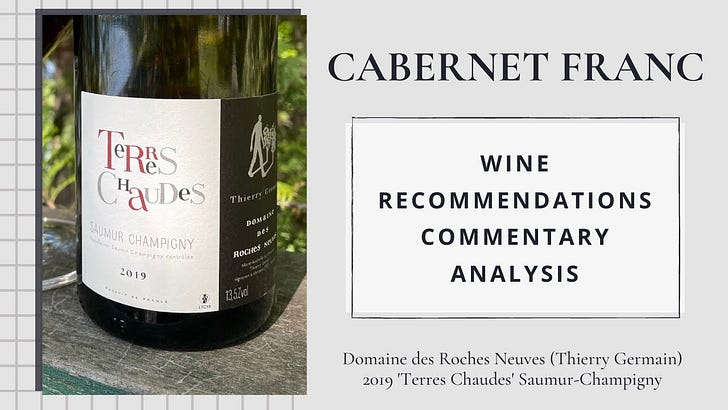
LG: Terres Chaudes comes from the clay-limestone soils of the lieu-dit Les Poyeux. For me, it's the perfect balance between the roundness of the clay and the structure of the limestone. That's really it. We're looking for that perfect balance. It's one of the most representative terroirs of Saumur-Champigny, and it's really all about that balance.
TG: I pretty much agree with Louis. It's a cuvée that's very much part of the estate's identity, with very peppery notes. When I say it reflects the identity of the grape, I mean that with this variety you have to accept its herbaceous, floral, and fruity sides. As for the terroir, the soils are more clay-based in places. There are really two different soil structures in Les Poyeux, which impart their own characteristics. The wines are quite spicy, with a distinct verticality, and I really enjoy the pleasure they offer.
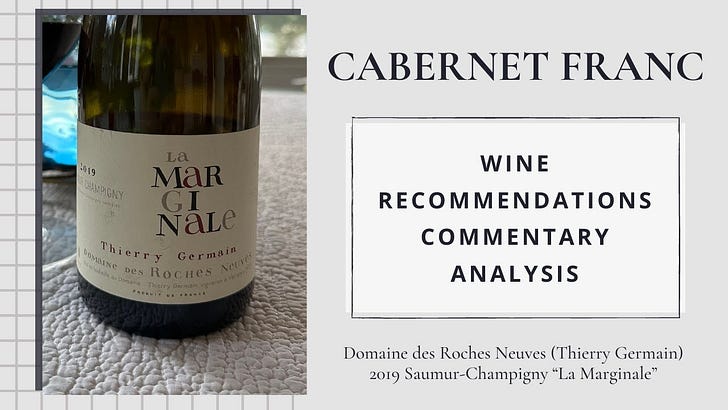
La Marginale
LG: La Marginale comes from the clay soils of the Fosse de Chaintres. These are my father's historic parcels, and historic for the estate too, because they were already part of it before Dad arrived. For me, what defines La Marginale is the texture on the palate. It's all about a very textured, very velvety mouthfeel. Dad often says, it's like touching the back of a rose petal. That's what really stays with me about La Marginale: that specific sensation and mouthfeel on the palate.
TG: Louis described the cuvée and the terroir very well. All I'd add is that with clay terroirs, and La Marginale is predominantly clay, you get wines with a great deal of depth and power. The challenge is always finding exactly the right ripeness to bring out the elegance of Cabernet Franc. We don't get that every year. I think we got it in the 2023 vintage. It's a terroir that, as Louis said, often has that rose-petal touch, and leaning towards rose and peony notes. It's a historic terroir for the estate that struggled to express itself, but I really like how it has been expressing itself over the last seven years.
CFC: For me, Clos de l'Échelier and Les Mémoires are the yin and yang of the range. What words would you use to describe each of them?
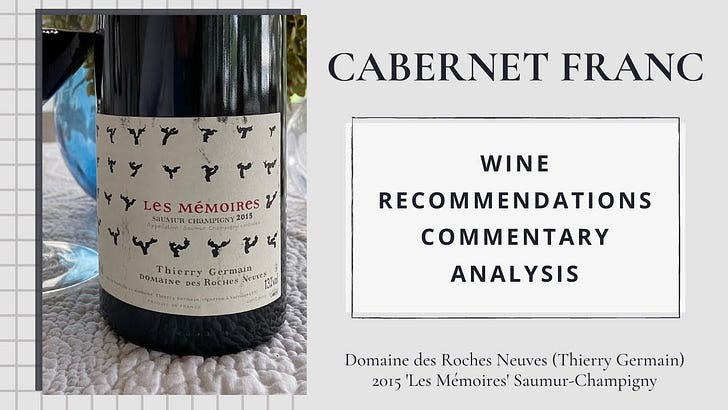
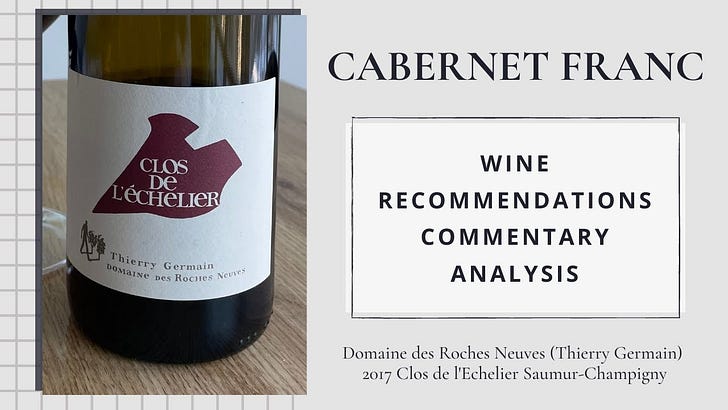
TG: Clos de l'Échelier is a very “vertical” terroir. It's very limestone-rich, so if I had to define it in one word, I'd say "mouth-watering." With Les Mémoires, we're on flint over limestone, so you find a bit more warmth. It's a terroir that is all about roundness on the palate, with black fruit. I'd say "depth” to describe Les Mémoires.
LG: They are two completely opposite terroirs. It's interesting that you ask, because we're usually more used to comparing La Marginale with Clos de l'Échelier. But it's true that Les Mémoires has a density, from the old vines, that you find less in Clos de l'Échelier, which is much more linear and focused. The length of Clos de l'Échelier comes from its acidity, an acidity that's inherent to the terroir and to the limestone. It's that limestone that brings the acidity. You can pick late or pick early, and that acidity will always be there. With Les Mémoires, you really have that density, which comes from the age of the vines, but also from the clay, the limestone, and the flint.
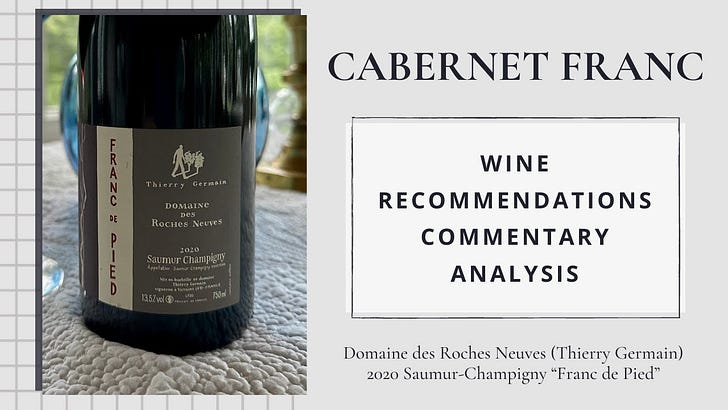
CFC: Finally, Franc de Pied is somewhat unique in the region because the vines are ungrafted. How would each of you describe it?
LG: Careful. If you get Dad started on Franc de Pied, we'll be here until tomorrow!
TG: To put it briefly, our ungrafted vines are on sandy terroirs. So, of course, there's no clay and no limestone at all. And, as I always say, sand allows for freedom. It's a cuvée that possesses tremendous freedom, with a very fine structure and a powdery mouthfeel and lots of fruit. These are always wines that are very low in alcohol, so they're incredibly delicious and moreish.
LG: For me, Franc de Pied comes from a terroir I found very difficult to get to get a handle on at first, because we're on sandy soils. With sand, when it rains a lot, the soils can give out quickly, and when it's very hot, they can burn quickly. So you always have to find the perfect harvest date to capture the profile we look for in Franc de Pied. But inevitably, thanks to the ungrafted vines, you get an extra level of drinkability, for me, and an accessibility that you perhaps find less in the other cuvées.
CFC: Thierry, you have some thirty years of experience in the region. If you had one small piece of advice for winemakers in other regions on how to improve their work with Cabernet Franc, what would it be?
TG: It's always tricky to give advice. Everyone has their own philosophy. But what I can say is that it's a variety you have to accept on its own terms. Winemakers working with Cabernet Franc often don't accept its herbaceous side, which is actually what gives it its quality. There's good green and bad green: there’s the pyrazines, and then the good herbaceous character. Once you intellectually accept that beautiful herbaceous quality, you go looking for it at different levels of ripeness. It's a variety that doesn't handle high ripeness well. Beyond 13.5 or 14% alcohol, it becomes a "bad Syrah," so to speak. That's a harsh thing to say about Syrah, a variety I adore, but Cabernet Franc's identity remains green. So if I had just one small piece of advice to give, it would be to go in that direction rather than the opposite. Back in the ’90s, for example, it was a variety that was often picked underripe. Today, there's a tendency to pick it overripe. Whenever young people come to the estate for training, or oenologists or others, I always tell them this, and I try to pass on that very idea of finding the right balance.
CFC: Last question, Cabernet Franc in three words. Louis, as the new generation at Roches Neuves, how would you describe the grape?
LG: Floral. Finesse, if it's made well. Cabernet Franc can be very rustic, but the whole beauty of our work with Cabernet Franc is coaxing finesse out of a variety that is rustic. So, finesse. And I'd have to say aging potential. When you seek out beautiful Cabernet Francs, for me it's a variety you drink after a few years. Even though you can certainly enjoy it young, give it two, three, four years, and that's when you start to discover the magnificence of Cabernet Franc.
CFC: Thierry, same question: describe Cabernet Franc for you in three words.
TG: The first word I'd say is gourmandise, deliciousness1. It's a fruit-forward variety, and we have to stop thinking that fruity/fruit-forward wines can't be great wines. The second word is salinity, because the interplay of salinity and bitterness in Cabernet Franc, when the grapes are properly ripe, is quite magnificent. And the third word, since Louis has already said it quite well, is its overall complexity in its relationship to terroir, to the person, and to the vintage. That is to say, it's a variety capable of expressing itself with great clarity, depending on the winemaker’s touch.
CFC: Thierry, Louis, thank you so much, and thank you for your passion for this grape.
TG: With pleasure. Thank you.
For more on the wines from Domaine des Roches Neuves, check out some of the below posts:
The French term gourmandise has no direct English equivalent. In wine, it describes a mix of deliciousness, pleasurability, and moreishness: the quality that makes you want to dive back into the glass for another sip!