
St-Émilion's Château Jean Faure: A Grand Cru Classé built on Cabernet Franc
A hidden gem on Bordeaux's Right Bank whose identity rests on the grape most estates treat as an afterthought.
At the northern end of the St-Émilion appellation, neighbour to Château Cheval Blanc, with the likes of Château Figeac and Pomerol's Château L'Évangile a few hundred metres away, Château Jean Faure is a cru of historical status in exceptional company. With over 60% of its vineyard planted to Cabernet Franc, this is that rare Bordeaux estate whose Grand Vin is led by the grape that most treat as a supporting character - a wine defined by perfume, restraint and a sophistication worthy of its distinction, yet one that remains deliciously accessible.
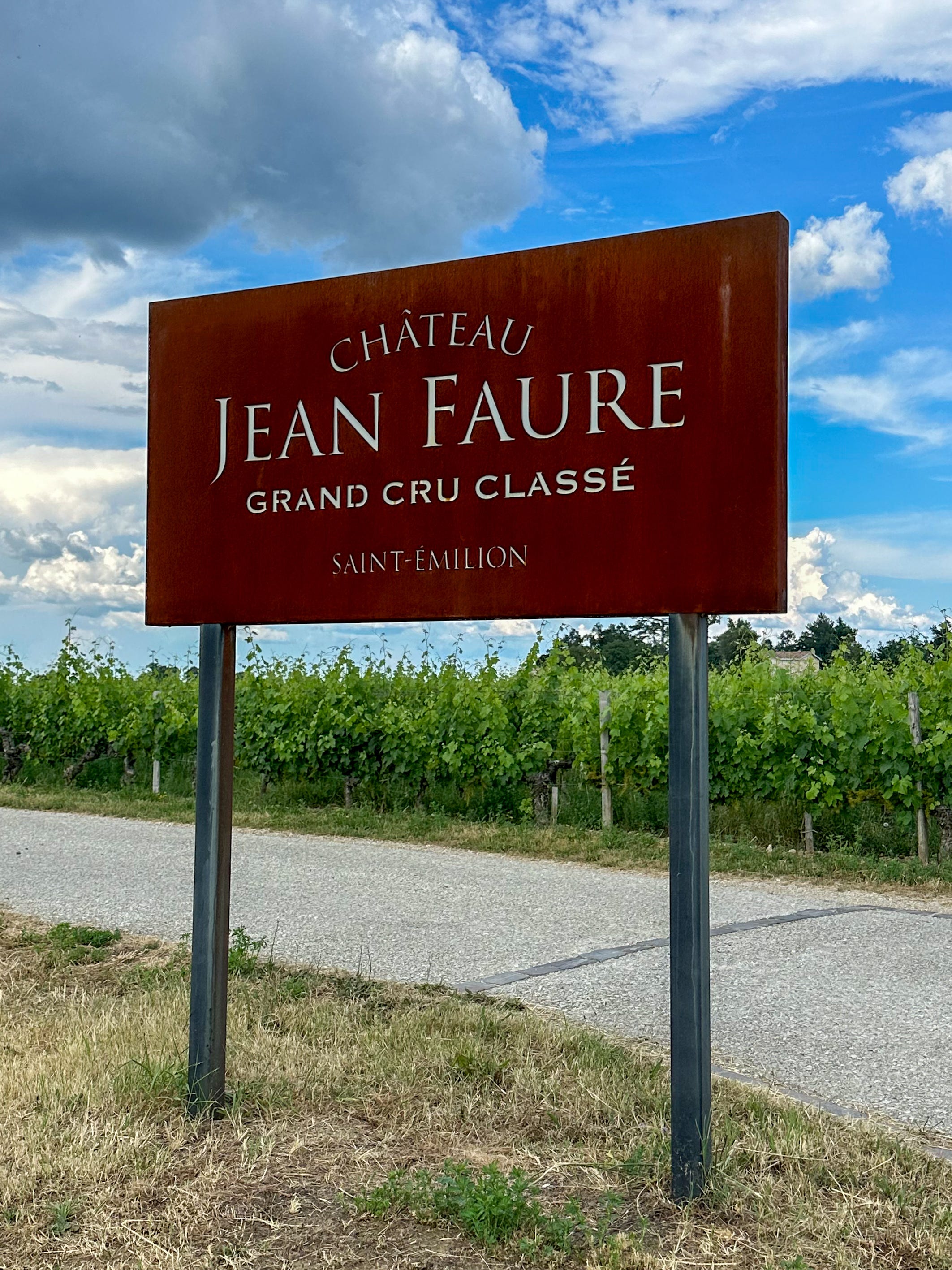
The Estate
While the estate’s history can be traced back to 1568, its position among the ranks of St-Émilion’s top estates first came in the mid-1850s when it was mentioned alongside the likes of Château Figeac in early editions of the Féret’s guide to the wines of Bordeaux at the time. By the 1893 edition, Château Jean Faure had been elevated to premier cru status with the remark “this growth produces an exquisite wine, highly aromatic and of good keeping quality.”


The estate’s status was formalized with the 1955 classification of St-Émilion, which ranked Jean Faure as a Grand Cru Classé property - a position it held for three decades. With the in 1986 classification, when the estate was owned by Michel Amart with Michel Rolland was consulting oenologist, the estate was declassified, with mismanagement of the estate impacting quality as the reason cited for the demotion.
Despite its lowly status during the 1990s and early 2000s among hundreds of unranked properties in the St-Émilion appellation, Château Jean Faure caught the eye of Olivier Decelle, owner properties in Burgundy as well as cru bourgeois estate Château Haut-Maurac in the Médoc, who purchased Jean Faure in 2004 with the intention to return the estate to its former greatness.
Following years of investment from the Decelle family, Château Jean Faure was elevated once again to Grand Cru Classé status in the 2012 St-Émilion classification. That return to classified status encouraged the family to invest furthest in the estate bringing on Château Angélus’s Hubert de Boüard as consulting oenologist in 2013 (until 2017), beginning organic conversion in 2014 (certified in 2017) and later biodynamic conversion in 2020 (certified in 2023) and the completion of a new, modernized chai in early 2023.
Vineyard & Terroir
Directly east of Château la Dominique and 100m from Château Cheval Blanc, with Pomerol’s Château l’Evangile bordering to the north, Château Jean Faure’s vineyard lies on one contiguous plot of land of 18 hectares, 11 of which are planted with Cabernet Franc. The average vine age is around 45 years, with the oldest block planted in 1924.


Like some of the estate’s illustrious neighbours where Cabernet Franc plays an important role, Jean Faure benefits from being situated on a band of soils that sit on the higher terraces around the plateau of St-Émilion, which feature a subsoil of molasse de fronsadais, a deep iron-rich clay (crasse de fer) over a soft limestone bedrock. The topsoil in the Cabernet Franc parcels, which ranges in depth from around 20 to 80cm, is a mix of sandy-clay with some parcels having a varying mix of gravels.


What makes this soil particularly well suited for Cabernet Franc is it combines an ideal balance of free draining capabilities and water retention capacity. The lighter texture of the topsoil pulls surface moisture away, while the heavy clay subsoil holds onto moisture when conditions are drier, but it also helps to restrict Cabernet Franc’s natural vigorous tendencies. The result is naturally low yields (28hl/ha on average) with an ideal yield-canopy balance, which is essential for managing the pyrazines in Cabernet Franc.
Alongside the estate’s focus on organic and biodynamic viticulture, they also replant new Cabernet Franc parcels by selection massale using heritage vines, furthering their commitment the grape as central to Jean Faure’s identity and legacy.
Wines & Winemaking
Coinciding with the transition to organic viticulture, the winemaking team at Château Jean Faure began to lean into their Cabernet Franc heritage and identity with greater commitment and enthusiasm, making small adjustments in the cellar to highlight the grape’s best characteristics.
During a visit in 2023 with then-Estate Director Marie-Laure Latorre and Maitre de Chai Louis Gadais, Marie-Laure explained that even their decisions with Merlot seek to highlight Cabernet Franc noting “they seek maturities and extractions of Merlot such that the character of Cabernet Franc is dominant.”


This character that is central to Jean Faure’s work with Cabernet Franc and the wines themselves is two-fold: an aromatic perfume, particularly the floral side of Cabernet Franc, and a fine-grained, elegant tannin structure. The team achieves this in part by fermenting Cabernet Franc at slightly cooler temperatures in concrete (26C at peak fermentation), as well as by focusing extractions at beginning of the vinification during a longer cold soak (up to 10 days) and before the ferment reaches 21C. Additionally, the choice of vessels during élevage reflect the desire to preserve Cabernet Franc’s varietal and fruit character with a preference of foudres and second-fill oak barriques for Cabernet Franc, with a greater proportion of new oak reserved for Merlot.
Château Jean Faure’s Grand Vin, which accounts for around 80% of its annual production, is typically a blend of 60-65% Cabernet Franc, supported by 30-35% Merlot and usually 5% Malbec. Each individual parcel is vinified separately in concrete without sulphites, with gentle extractions but longer macerations of upwards of 4 weeks. Aging is for 12 to 14 months in a combination of new oak barriques (less than 35%), second-use barrels, large foudres and concrete.
The La Réserve, the estate’s second wine, was first introduced in 2019 and features a blend of 50/50 Cabernet Franc and Merlot that is vinified and aged in concrete, representing around 20% of the estate’s production in most vintages.
Favourable yields and excellent quality in the 2023 vintage allowed Château Jean Faure to reserve a dedicated parcel of old vines for their first (and to date only) 100% Cabernet Franc bottling while preserving the “balance, excellence and identity of the estate’s Grand Vin, where high-quality Cabernet Franc is essential,” noted Louis Gadais, who took over as the estate’s Technical Director in 2025. The approach in the cellar for this cuvée was intentionally minimalist, vinifying and aging the wine in 17hl concrete eggs with the goal of “revealing the character of Jean Faure’s Cabernet Franc and capturing the full purity of the fruit,” Gadais added.
This 2023 bottling also marks an important vintage for the domaine: the year the estate its first Cabernet Franc symposium, bringing together Bordeaux and Loire producers for a day-long conference around the grape, the 20th vintage of Olivier Decelle at Jean Faure, and their first vintage certified biodynamic.
Château Jean Faure’s expressions of Cabernet Franc, whether that be in their Grand Vin or their 2023 single-varietal bottling, offer the wine drinker all of the best attributes of the grape when handled with care and attention: perfume, refinement, transparency of place, and charm. In an appellation where Cabernet Franc is more often than not the supporting player, and where the wines that do let it lead sit well beyond the reach of most of the people who love it, Château Jean Faure is the rare estate that makes St-Émilion Cabernet Franc both accessible and pleasurable. These are wines with character and drinkability in their youth, and with plenty of capacity to age - and for a Grand Cru Classé of this heritage and pedigree, the value they offer is exceptional.


Tasting Notes
2023 St-Émilion La Réserve (13.5% abv., SRP 22EUR): 50% Cabernet Franc, 50% Merlot. A pure, fresh nose that showcases the best of both varieties with red and dark fruits (black cherry, raspberry) and earth undertones of evergreen, thyme, rose and violets with a hint of quatre épices and cocoa. The palate is deliciously approachable with juicy acidity and fine, soft, chalky tannins that wrap around a medium bodied, pure-fruited core. A charming, companionable St-Émilion for a new generation of Bordeaux consumer. A great value and a superb introduction to Jean Faure’s work with Cabernet Franc. 15,000 bottles produced.
2023 St-Émilion Grand Cru Cabernet Franc (13.0% abv., SRP 36EUR): Fragrant and aromatic, with purity and an exuberant fresh fruit character that leaps out of the glass. Blueberry, fresh Bing cherry with a touch of blackcurrant savouriness, that is complemented by classic undertones of fresh cedar leaves, rosemary, peony and spicy notes of cinnamon and black peppercorn. Lush and succulent, with buoyant acidity and ripe, fine, velvety tannins, a structure that is well balanced by enveloping fruit and fluid layers of sweet tobacco and graphite through the mid-palate and finish. Energetic and endearing, mixing confidence and approachability, the wine feels absolutely true to place and grape. Expressive, open, scrumptious, no decanting necessary, and will continue to develop over the medium to long term (2026-2040+) 3,485 bottles produced.
2023 St-Émilion Grand Cru (13.5% abv., SRP 54EUR/$60USD): 65% Cabernet Franc, 30% Merlot, 5% Malbec. The classically profiled nose highlights Cabernet Franc’s aromatic perfume with clarity and confidence showcasing notes of black raspberry, blackcurrant and morello cherry, with a touch of sous bois, cedar, sage and fragrant violets and lilacs. The nose is complemented by added notes of barrique and varietal spice (allspice, clove), cocoa nibs, plum and a touch of graphite on the palate. Vibrant, invigorating acidity keeps the palate focused, while the firm, velour like tannins are made all the more supple thanks to a beautifully concentrated and pure-fruited core. Elegantly framed, complete, pure, brimming with sophistication and generosity, the 2023 “Grand Vin” is pure pleasure in its youth and has plenty to offer those who wish to hold this for the longer term (2030-2045+). Exceptional. 78,500 bottles produced.


