
Tasting Diaries: June 2025
Vol.62 | What's In My Glass
Greetings from the Loire Valley! June has come and gone, and it was a month that took me to New York’s Long Island and Hudson Valley regions for a whirlwind visit, and now I am back in the Loire, where last week I had the pleasure and honour of co-leading a masterclass on the red wines of Anjou at La Paulée d’Anjou with wine critic and journalist Jérôme Gagnez. I have been enjoying a diverse array of Cabernet Francs over the last month, so here are some highlights.
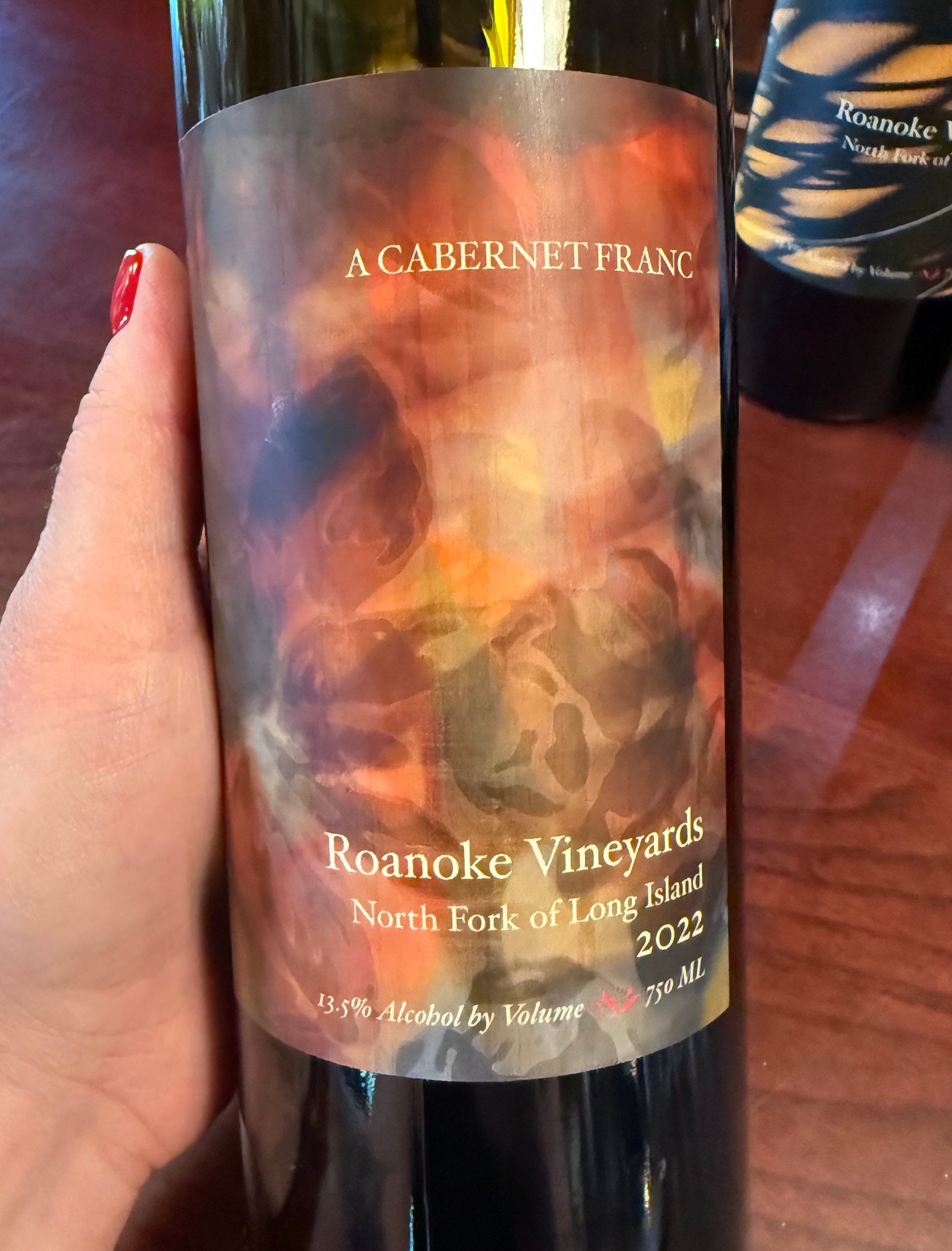
As part of my visits to Long Island, I had the pleasure of meeting one of the region’s OGs, Richie Pisacano of Roanoke Vineyards, who began working in vineyards on Long Island at the tender age of 15. It was during this visit, when we were joined by another Long Island viticulture OG Steve Mudd of Mudd’s Vineyards, where I really began to understand Long Island’s journey with Cabernet Franc. While Long Island’s viticultural history spans 50 years, the Cabernet Franc story is really much more recent with the majority of vines only being planted in the early 2000s, so the region has accomplished a tremendous amount with this variety in a relatively short period of time. What’s more is there is a ton of enthusiasm for the Cabernet Franc, with its superb versatility and how expressive it can be in all vintages. Of the many Cabernet Francs I tasted on this whirlwind visit of Long Island, the 2022 Roanoke Cabernet Franc (13.5% abv., SRP $38USD) was certainly a stand out. Classically profiled with about 20% new oak aging, the wine was beautifully balanced with a mix of fresh red and dark fruited notes, cedar and herbs with silky tannins and cleansing acidity. Aromatic, fleshy and peppery, superb drinkability but with good structure, it was the sort of Cabernet Franc I would reach for any day of the week without hesitation.


While the majority of the Cabernet Francs I taste and write about are reds, one of the reasons why I love this grape so much is for its versatility. I was pleased to see several wineries on Long Island and in the Hudson Valley embracing this playful side of Cabernet Franc and experimenting with different styles. I visited Macari Vineyards where I had an extensive tasting with winemaker Byron Elmendorf, who joined the estate in 2020. We opened the tasting with their rosés and a pet-nat, and I was instantly smitten with both their 2024 “Meadowlark” Cabernet Franc Rosé (12.5% abv., SRP N/A) and the 2024 “Horses” Cabernet Franc Pet-Nat (12.5% abv., SRP $32USD). The Meadowlark Rosé leans in a more Provençal style, with a delicate Cab Franc character of Rainer cherry, soft herbs and Lily of the Valley undertones. Bright, elegant, with a salty finish, it is a beautiful example of Cabernet Franc Rosé. The 2024 Horses Pet Nat has plenty of fresh berry characters with a bit of rhubarb and herbs, with a soft autolytic note of Carr’s Water Crackers through the mid-palate. Creamy, fresh, complete, very pretty, it is probably my favourite example of Cabernet Franc in pet-nat form that I have had to date. I also had the pleasure of trying the Bedell Cellars 2024 White Cabernet Franc (12.5% abv., SRP $32US), which winemaker Marin Brennan began making in 2018. As part of the winery’s small batch series, this blanc de noir was originally conceived as a one-off experiment, but was such a hit that Marin continues to make it every year. Whole cluster pressed, fermented in stainless steel with some brief lees aging, it is crisp and characterful, with underlying notes of white raspberry, lemon thyme and a touch of spice. Balanced, refreshing, and a delight to drink, Marin and I enjoyed it with some local oysters at The Old Mill in Mattituck and it was superb pairing.
Another highlight of my time on Long Island visiting McCall Wines in Cutchogue and meeting owner Russell McCall. McCall wines was established in 2007 and was one of the first in the region to receive national press for their wines, which helped to put Long Island on the American wine map in a much more serious way. McCall has an extensive library of back vintages that are available for sale online and in their shop, and Russ and I tasted their 2014 Cabernet Franc Reserve (13.0% abv., SRP $49USD), which is coming from some of Long Island’s oldest Cabernet Franc vines, which were planted in the late 1980s. The 2014 is a thoughtfully-crafted Cabernet Franc that shows classic Bordeaux-styling with aging in French oak barrels without being overdone, and with 10+ years of aging, all the elements in the wine were beautifully integrated. Plush, ripe red and dark fruits and showing early signs of tertiary development, the wine is layered with dried herbs, sweet cured tobacco and warming spices, with refreshing acidity and velvety tannins. Classic, complete, with lovely restraint and elegance. For those that love Cabernet Franc with some age, this is a winner that has plenty of life left in it. (NB: the 2014 has appears to have since sold out, but the 2015 is now available.)


My time in the Hudson Valley was brief, but I did have the pleasure of being in the region last May for the Cab Franc Coalition’s 2024 trade and media tasting, so I had certain degree of familiarity with the producers and wines. I spent an evening with Fjord Vineyards owners Matthew Spaccarelli and Casey Erdmann, who were kind enough to organize a selection of wines from across the region for us to taste and discuss. The Hudson Valley is certainly an emerging region for Cabernet Franc in New York with one of the most marginal climates for the variety in the state and only about 30 acres or so under vine. However, with the creation of their Cab Franc Coalition in 2016 to promote the region’s 100%-based Cabernet Franc wines, the excitement for the variety is palpable. In a place where vintage variation can be even more marked than in the Finger Lakes or Long Island, I remain hopeful that Cabernet Franc rosé becomes an increasingly important way for the region to showcase their passion for Cabernet Franc. Fjord’s 2024 Cabernet Franc Rosé (12.5% abv., SRP $22USD) is a great example of the style. I tried their 2023 when I was in the region last year and loved that vintage, and the 2024 shows a little more ripeness and flesh thanks to the warmer conditions of the vintage. Gastronomic, with notes of mint and rose water along with bright berried fruits, it shows a some structure from a bit of tannin with a fresh, mineral-focused finished. Just delicious. I also quite enjoyed the 2022 Cabernet Franc from Whitecliff Vineyard (13.0% abv., SRP $32USD), which was the red of the night for all three of us. Showing fleshy red and blue fruits, a touch of mint, rosemary and violet, it showed lively acidity with velvety tannins, and a balanced use of oak. Complete, honest and modestly-profiled, it was easy-drinking yet with plenty of intrigue. A really nicely made Cabernet Franc.
Back home, I raided my cellar to try the Gabriëlskloof 2018 “Landscape Series” Cabernet Franc (Bot River, South Africa, 13.5% abv., SRP $40USD). Located in Walker Bay, the Bot River ward is a “cooler” climate growing region in southern South Africa that is heavily influenced by the cold breezes that come in off of False Bay. I profiled the 2017 vintage back in 2021 and highlighted the estate’s work with Cabernet Franc - a wine that has slowly become one of its calling cards since their first release. The 2018 is clean, lifted with a lovely red-fruited nose that has a pleasant balancing underlying savouriness. Notes of sage, jasmine and lilac mix with lingonberry and wild strawberry, and the wine shows an impressive, upright backbone of acidity. Delicately spiced with taut, finely-woven, cotton tannins, the fruit displays a certain “sunny” fruit character but it is balanced impeccably by elegant herbal undertones. Perfumed, contemplative, sophisticated, it ticks all the boxes for being an elegant, beautifully-styled Cabernet Franc with plenty of varietal presence and energy.
For my masterclass at La Paulée d’Anjou, I chose to take attendees on a little journey on the main terroirs of Anjou for Cabernet Franc. The Anjou-Saumur region has a rich tapestry of soils and influences, but there are four main groups of terroirs that we find across the region: alluvial soils (most notably in Bourgueil and St-Nicolas-de- Bourgueil), Turonian tuffeau chalk-influenced terroirs (present in all appellations), Jurassic limestone (in central Saumur) and then the Anjou Noir schists and sandstones of Western Anjou. I chose wines all from the 2023 vintage, which I describe as a “modern” Ligérien vintage - that is to say, it has classic, almost old-school Loire Valley acidity and verve (similar to recent vintages like 2021 and 2024) but with more ripeness reflective of the warming conditions we’ve seen over the last decade or two (like in 2022, for example). I presented Yannick Amirault’s Bourgueil “Côte 50” as the wine from alluvial soils, Arnaud Lambert’s Saumur-Champigny “Terres Rouges” as the expression from tuffeau, the Château de Fosse-Sèche Éolithe from Jurassic limestone and Pierre Ménard’s Anjou Rouge “Orion Alpha” from the schistous soils of Anjou.
The side-by-side of the Terres Rouges and the Éolithe from Fosse-Sèche was particularly note-worthy for me because they both displayed the typicity from their respective terroirs that I’ve come to appreciate. The Arnaud Lambert’s 2023 Saumur-Champigny “Terres Rouges” (13.0% abv., SRP $26USD/17EUR) is from parcels on the Middle Turonian tuffeau chalk (known as craie verte) and is fermented and aged in a combination of stainless steel and concrete. With classic notes of red and blue fruits complemented by a touch of sage, basil, violets and roses, with a persistent, underlying spiciness of pink peppercorns that carries the palate experience through the finish. However, it is the acidity and the tannins that show the story of place. The acidity being vibrant and mouth-watering, and ever-present on the palate from beginning to end. And it displayed Cabernet Franc tannins emblematic of tuffeau-influenced soils, which for me always seem to have a fine, velvety, almost spherical character, that have a certain ease and pliability on the palate that I think helps make the wines from these terroirs so approachable in their youth.
The Château de Fosse-Sèche 2023 Eolithe (Vin de France, 12.5% abv., SRP $38USD/22EUR) comes from the estate’s parcels in Vaudelnay, where we find a broad vein of silex de Brossay, which is a denser, harder limestone than tuffeau, and the wine is also fermented and aged in a combination of stainless steel and concrete. The wine shows bright red berried fruit, twiggy herbs, a persistent peppery character reminiscent of green peppercorns, and one of the notable signatures of these limestone soils is a combination of salty and graphite minerality. The acidity is high-toned and energetic, while the tannins show a distinct “crispness” about them. It is a bit difficult to imagine a wine’s tannins as being crisp, but if you can visualize how a freshly ironed shirt has a certain stiffness while also being soft, this is how I think about Cabernet Franc tannins from these denser limestone. There is a linear, almost edgy profile to the tannins, which can often need a bit of time to soften, but the 2023 Éolithe has plenty of flesh to carry those tannins making this wine very pleasurable in its youth. For anyone out there that wants to nerd out with friends with a couple of bottles, these are two to consider showing side-by-side.
Last week was my birthday, and my amour and I celebrated with dinner at La Route du Sel in Thoureuil, a picturesque village perched on the southern shore of the Loire in between Saumur and Angers. After several days of intense heat, we were blessed with a most perfect June evening for dining outside with a tranquil view of the majestic Loire. Our vin du soir was the Clau de Nell 2017 Anjou Rouge Cabernet Franc (13% abv., SRP 31.50EUR). I was thrilled to see an “older” vintage of Cabernet Franc on the wine list here (which is a beautifully curated list, by the way), and so I didn’t hesitate to order it. And the wine did not disappoint! Concentrated and complex, it was like a mille-feuille of red fruits, herbs (tarragon, herbes de Provence), florals (rose and geranium) and exotic spices (cinnamon, clove, white pepper and star anise). While it displayed a certain richness and density, it had superb freshness and vitality, with tannins that were impeccably fine and silky with a lovely chalky minerality on the finish. Such an exquisite wine that is entering a superb drinking window at the moment. (As I am writing this, I realized this wine is also available online through the domaine… so you can guess there might be a bottle or two that will be added to the cellar!)
Over the weekend, we braved the heat and took in Anjou Vélo Vintage, Saumur’s annual celebration of all things vintage and bicycles! It was my first time attending the festival, which features vintage bicycle races of participants fully clad in 1920s-era attire to complement their retro rides. The “village” features a slew of artisans, music, food purveyors, and, being that we're in the Central Loire, plenty of Cabernet Franc to go around! All the local sparkling wine houses were present, as was the Syndicat des Vins de Saumur, featuring a wide selection of Cabernet Francs (and, of course, the odd Chenin!) across the region for 4EUR a glass or 15EUR for a bottle. We enjoyed the Château de Targé 2024 Saumur Rosé (12.5% abv., SRP 9,90EUR), which was a quintessential Cabernet Franc rosé from tuffeau terroirs of Saumur-Champigny. Fruity and fresh, with layers of basil, tarragon, studded with lilac florals and a touch of nutmeg spice, the wine shows crisp acidity with a delicately mineral core. Elegantly-profiled, with enough concentration and structure to support a wide array of dishes, it was pure pleasure on a sunny Saturday afternoon in Saumur.
Thank you for reading this month’s edition of my Tasting Diaries. As a little bit of foreshadowing, I will be in the Loire for the next few weeks, so expect more Loire Cabernet Franc content than usual here (and on Instagram, for those that follow me there). There are several events that I have noted in my calendar, and I’m also planning visits at several domaines across the region while I am here. I hope to be able to profile a number of new wines and producers, and even shine a light on the diversity of rosés across the region - something that I don’t often get a chance to do as the selection of Loire Valley rosé at home is not nearly as extensive as it is here. Suffice it to say, if you are a Loire lover, there is lots to look forward to. Though I also tasted a handful of non-Loire Cabernet Francs before leaving which I plan to profile in some upcoming posts. It may be summer, but there is no rest for the thirsty!
Thank you again for being along on this journey, and for all your enthusiasm and support.


Back at it with the Clau de Nell! Happy belated birthday too!