


Over the long weekend I returned to Ontario after three glorious (and warm!) months in the Loire Valley — my home away from home. When I am in the Loire for an extended period of time, I really have a chance to immerse myself in the rural rhythms of the region, eat all the seasonal goodies from the local marché, and appreciate that everywhere I turn, from supermarket to caviste, neighbourhood brasserie to 500-person countryside summer fête, riverside guinguette to white-tablecloth, gastronomic bistro, or a backyard gathering with family or friends, Cabernet Franc is always on offer.
Since being home, admittedly, I am suffering from Loire withdrawl; but I’ve also been able to get reacquainted with my cellar, start to organize myself for what features I want to write in the months ahead, and reflect on what I appreciated the most about three months of tasting and drinking Loire Valley Cabernet Franc. Now, full transparency, I drink a lot of Loire Cabernet Franc when I’m at home too, but Loire Cabernet Franc in the Loire, well, it just hits differently. So, here are a few themes that surfaced during the last three months spent Cabernet Franc’s ancestral home.
No oak? No problem.
A summer of drinking Loire Valley Cabernet Franc was a welcome reminder that this grape does not need oak to be delicious. In fact, I would argue that Cabernet Franc is often most delicious when there is no overt use of oak.
In the Loire Valley, the overwhelming majority of Cabernet Francs are made in large neutral vessels, such as stainless steel, concrete, fiberglass or large oak vats. These vessels impart no flavour, and they also help preserve the wine’s precious fruit and aromatics, which can easily become dried out or disappear when aged in oak. When Cabernet Franc’s fruit character, personality and charm are front and centre, the wines become infinitely drinkable and easy to pair with foods. Don’t get me wrong, there is a time and a place for an oak-aged Cabernet Franc, and certainly the fruit from some terroirs really benefit from extended oak aging, but when I’m in the Loire, nine times out of ten, the wine that I am reaching for has seen little to no oak during its life before bottling. (“Unoaked” Cabernet Franc isn’t made nearly to the same extent in other Cabernet Franc growing regions around the world, which baffles me. I have theories, but that is a rabbit hole — and possibly a rant — for another post!)
There’s a Cabernet Franc for That!
One might think that drinking only Cabernet Franc all of the time all summer long would get boring or be a challenge for food pairings or occasions, especially given how unseasonably warm it was. Au contraire, my friend! There are few places on earth where Cabernet Franc is capable of producing such a wide diversity of expressions than the Loire Valley.
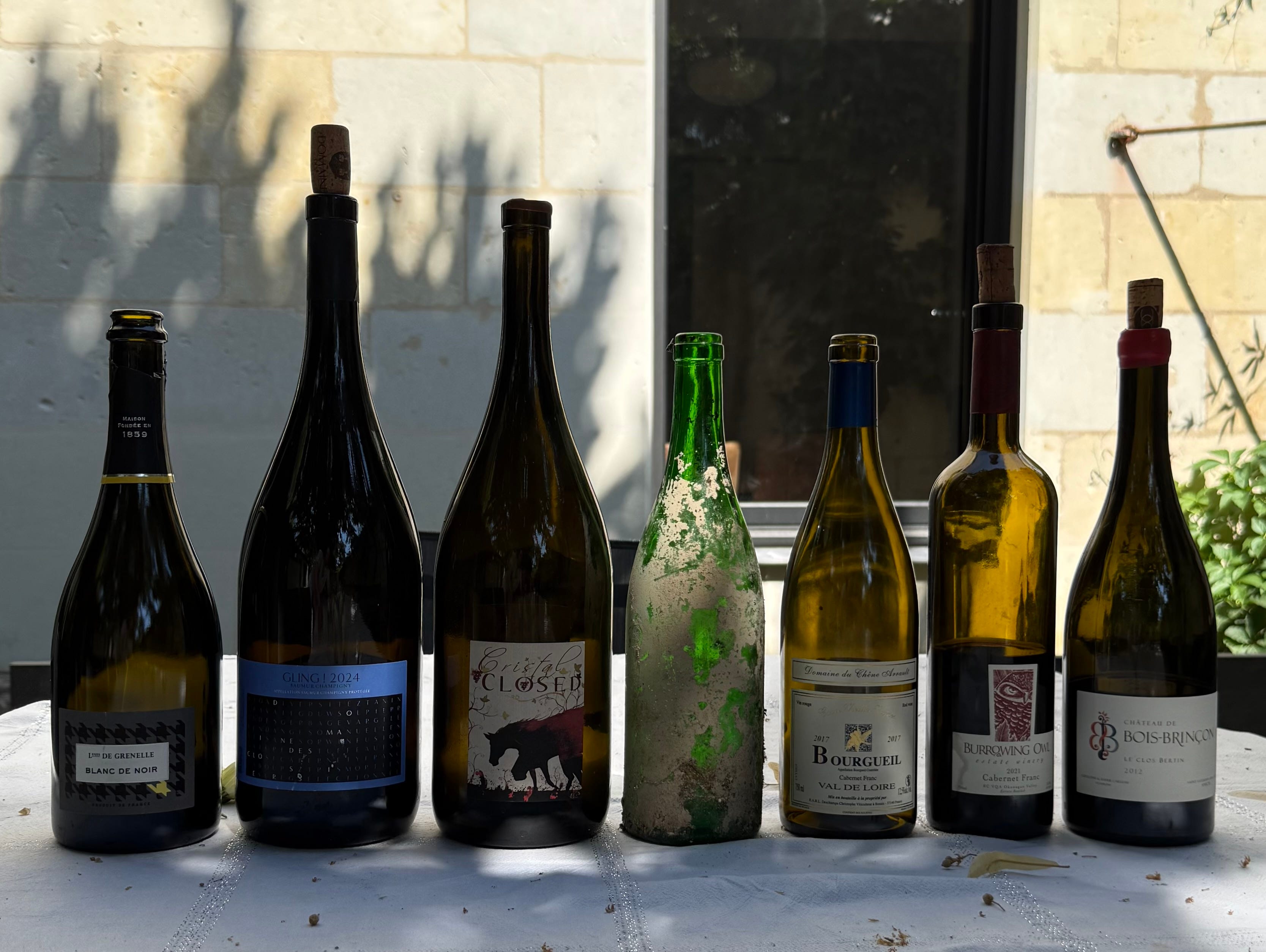
When moments required bubbles, I enjoyed a wide array of rosé and blanc de noir sparkling — traditional or ancestral method, extra brut to brut, made by the grand maisons and artisanal producers alike. Still white Cabernet Franc is increasingly available in a wide range of styles, which I often reached for in place of other regional whites from Chenin Blanc, Sauvignon Blanc or Melon de Bourgogne. Do I even need to mention dry rosé? With the summer being as warm as it was, Cabernet Franc rosé was literally on tap and often enjoyed with handy refreezable ice cubes that keep the wine cold without diluting it.
Despite the heat, I still enjoyed a lot of red Cabernet Franc. As noted above, the majority of the region’s reds are produced in a fruit-forward, early-drinking style (without oak!) that are best enjoyed slightly chilled (14-16C), making them delicious options on a warm day. We also grilled a lot this summer, and some cuts of meat are best paired with something more firmly structured. In these instances, I would reach for Cabernet Francs from the clay-limestone terroirs of the slopes or specific vintages (see below) that deliver more structure and tannin, which are excellent accompaniments to an entrecôte of beef or grilled leg of lamb. And for a special occasion, there is no shortage of library vintages that are available from a number of domaines around the region.
What about dessert? Well, I am not really a dessert person, so at the end of a meal when I’m in the Loire, I often choose cheese accompanied by another glass of Cabernet Franc. For a light dessert where Cabernet Franc is centre stage, a classic preparation of strawberries macerated with sugar in red wine is always refreshing and delicious. And if a slightly sweet wine is how you like to end your meal, I wouldn’t hesitate to reach for a Cabernet d’Anjou or any number of demi-sec traditional method sparkling reds produced in the region, which happen to pair beautifully dark chocolate.
Millésime Matters
Over the course of the summer, I tasted and enjoyed a number of different vintages of Loire Valley Cabernet Franc — young, old, cool, warm, and everything in between. Historically, Cabernet Franc has been one of the Loire’s most vintage-sensitive grapes and wines. Up until about two decades ago, Cabernet Franc struggled to ripen in most vintages. With climate change and improvements in viticulture, thin and unripe Loire Cabernet Franc is a thing of the past, but vintage variation still exists. Most speak about vintage variation like a caveat, an apology for something we experience in the glass. I believe vintage variation is Loire Valley Cabernet Franc’s superpower.
As with any superpower, you just have to understand it and know when use it. Prefer fresh, juicy and perfumed Cabernet Franc? Reach for a 2021 or 2024. Richly textured and concentrated? Consider a 2019 or 2022. Need something plush and well-rounded? A 2020 or a 2025 might be up your alley. Craving something somewhere in between? A 2023 will likely do the trick. These are all great vintages for Loire Valley Cabernet Franc — it is simply a question of who’s enjoying the bottle and what style of red they want to drink at that moment.
My Loire Cabernet Franc Vintage Guide will be published in the coming weeks — a proper year-by-year breakdown for paid subscribers. If you'd like it in your inbox the moment it lands, you can upgrade your subscription here.
***
After three months in the Loire, I am even more convinced that we are living in the golden age of Loire Valley Cabernet Franc. Across all price points, quality levels, wine styles, and vintages, there is delightfully drinkable, characterful Cabernet Franc being made all across the region. If you have not yet given these wines a fair shake — perhaps you encountered a bottle that didn’t deliver what you had hoped — let’s talk. Reply to this email, or send me a direct message, I’m here to help. Life is short, and there is no time like the present to discover the joys of Loire Valley Cabernet Franc.
I can’t wait to read your reports. I don’t get to the Loire often enough, but seeing it through your eyes (and tastebuds!) is the next best thing!
Well done great article . As a winemaker who started his carrier in the Loire in the 70's and 80's - I used to travel extensively in the area . Agree totally on the subject of oak . This is a Bordeaux aberration and was not part of any particular focus in the Loire . Not that they did not use barrels and had cooperages - but these were containers from the past and not for imparting oak flavour